Introduction
This post analyses the recent conversation between Mr Robert Bigelow and Mr George Knapp. Specifically, I will focus on the tensions in what I call Bigelow's UFO "disclosure-strategy".
 |
| Source. |
The talk between Knapp and Bigelow starts with the premise or idea that UFO disclosure is not so far away, compared to 30-40 years ago. The center of the talk is Bigelow's meeting with President Trump on January 6, 2026. In that meeting, Bigelow advised and encouraged the president to deliver the following confirmation regarding UFOs/UAP:
A non-human intelligence presence has been on Earth for a very long time, using spacecraft with performances completely beyond our capabilities and our known physics.
In the talk, Bigelow makes the sound claim that confirmation and disclosure are "welded together." That is, it would be very difficult and time-consuming to get to a worldwide disclosure without a presidential confirmation that some UFOs/UAP are of non-human origin and that "they" are here.
I agree with Bigelow on this. For instance, I have previously addressed the necessity of a top down "ontological acknowledgement" here, and why an eventual transformational disclosure matters here.
But the main purpose of this post is to identify and reflect on some tensions in Bigelow's reasoning on how to get to a disclosure process. Because I think that the identified tensions are essential to solve in order to enable both confirmation and disclosure. You can think of the "tensions" as constraints or barriers for mainly reaching a worldwide disclosure.
The main theme I have identified in Bigelow's disclosure-strategy is trust. And my interpretation is that some of the major tensions in Bigelow's reasoning on how to embark on a disclosure process are:
- Trust between different human actors. In the text below, I will focus on two actors or groups: the so-called "gatekeepers" (a term used in the talk) and the U.S. government, especially the executive branch.
- Trust between humans and non-human intelligence (NHI).
So, on a more general level, the main theme could be social relationships, since any constructive relationship is built and maintained on mutual trust, respect, and so on.
Initially, Bigelow's focus on trust and relationships surprised me positively. On the other hand, in what way could trust and relationships not be essential for a constructive disclosure process? So, I sympathise with Bigelow's focus on those themes as a necessary foundation for UFO/UAP disclosure. I say more about those themes in the section "Closing thoughts".
In the next section, I will focus on the tensions concerning the human side in Bigelow's reasoning about how to get to a disclosure process, i.e., the first point above about trust between different human actors or groups.
For the full context of what I discuss below, listen to the talk between George Knapp and Robert Bigelow in its entirety (click on the first link above).
Collective action dilemma as a barrier to UFO disclosure
This tension has structural similarities with a collective action dilemma. The main actors here are the government, the "gatekeepers" (both in the government and/or private contractors), and the citizens. Every actor or group has different rights, obligations, interests, credibility, etc., regarding the UFO issue and disclosure.
Recall Bigelow's suggested confirmation statement to the president: How would the different actors or groups be impacted (if in any way) if the president officially stated that some UFOs are of nonhuman origin and "they" have been here for a very long time?
According to Bigelow, he wanted the president to focus on the "gatekeepers." Why? Because, according to Bigelow, the "gatekeepers" are "diamonds in a coal mine" and "heroes of a different kind." Now, that may or may not be the case (it probably varies from gatekeeper to gatekeeper).
My point here is that I think there is a major tension or even a contradiction in Bigelow's reasoning about the effects of an official confirmation and the current lack of trust between the "gatekeepers" and the U.S. government (USG).
Will a presidential confirmation of the reality of UFOs and NHI, make the diamonds come out of the coal mine voluntarily? And on pure trust in the government that, according to Bigelow, is "absolutely, totally complicit in any kind of process of back-engineering or anything to do with ETs..."? (40:37 minute mark).
I understand and can sympathise with what Bigelow is trying to do with his advice to the president to focus on the "gatekeepers", i.e., to raise the question of who is accountable for the 80 year UFO secrecy and where to draw the line between complicity or not.
However, I believe the main barrier for the confirmation statement to have any positive outcomes is trust. Hence, we have a collective action dilemma between at least the "gatekeepers" and the USG, especially the executive branch.
How does one solve that "collective action dilemma"? My only suggestion is what Bigelow considers in other places in the conversation with Knapp: Mutually trustful and respectful relationships. If we are considering constructive relationships within institutions, then the foundation is leadership ("lead by example", the best leaders facilitate the success of others, etc.).
To be clear, my point here is the tension between the presumed outcomes of a presidential confirmation on the "gatekeepers'" willingness to leave their respective "coal mine" and their current level of trust in a complicit government in decades of cover-up regarding the UFO issue.
- A short-term question is: Will a confirmation by President Trump make any difference to the "gatekeepers'" willingness to speak about their knowledge about the UFO/UAP issue?
- Some long-term questions are: Should the UFO issue and disclosure be the responsibility of the executive branch in any democracy? If not, what role should the executive branch have, and who is appropriate, trustworthy, and capable to handle the UFO issue and disclosure?
Bigelow and Knapp are implicitly covering those long-term questions in their talk. And for me, those questions is the main takeaway from the talk.
Because, as I see the current situation, no nation has a well-developed disclosure strategy. A strategy differs from a plan. The latter is a static list of what to do. The former has a theory of change that clearly justifies the why and how to make a constructive impact.
Bigelow's theory of change seems to work on two different levels with a wide gap between them: a communication level (presidential confirmation) and a legitimacy level (trust between different actors/groups). In reality, the two levels do not seem to connect, and I am not convinced that clear communication will impact the degree of trust.
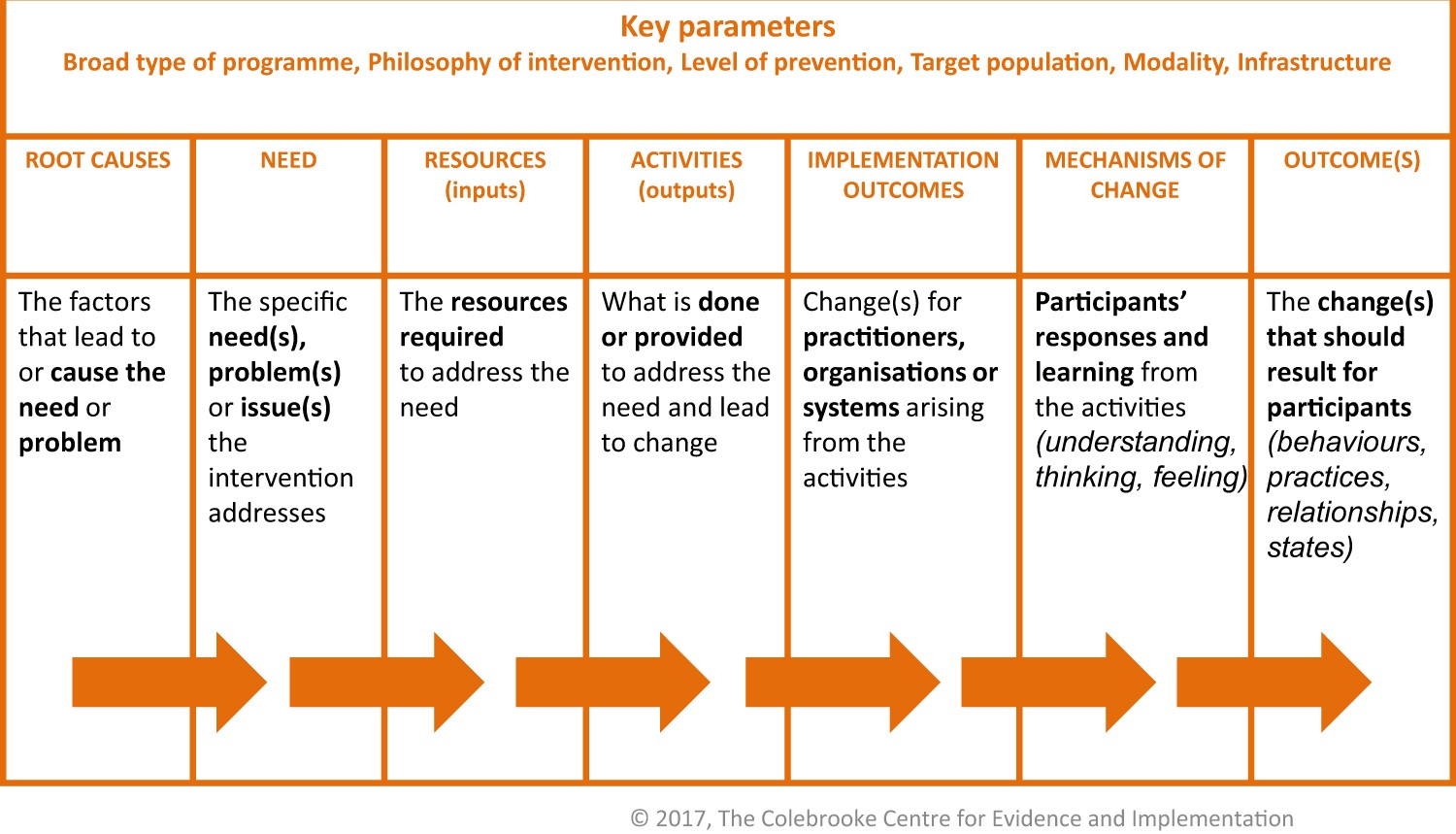 |
| A theory of change identifies relevant parameters for different actors and understands the logic of how to reach desirable outcomes. Source. |
Closing thoughts
I think everyone who understands the existential and scientific significance of the UFO issue and worldwide disclosure should give Mr Bigelow credit for advising the U.S. president on the UFO/UAP subject.
If I have been critical of Bigelow's "disclosure-strategy", it is because I care about and understand the importance of the UFO subject for the future of humanity and life on Earth. But again, I respect his initiative and courage to have a meeting with the president on these matters.
As I have tried to convey in some of my previous posts, I do not believe the main problems for UFO disclosure are institutional, legal, etc., per se. What are institutions and legal frameworks? They are human or social constructions. Which does not mean that they are not real or do not have objective effects on our psychology, behavior, etc.
What it means is that the quality of social relationships will shape the effectiveness of any institution. In other words, if we want to change (desirable outcomes) the current UFO-situation, we likely first have to change the form and quality of the social relationships among and between the actors and groups involved in the UFO issue and disclosure.
As Bigelow asks in the talk with Knapp: How do we build mutually trustful and respectful relationships with nonhuman intelligence?
That is a highly relevant question. However, I think we first need to figure out how we build and maintain constructive relationships with each other, i.e., human-to-human-interactions.
Take care
No comments:
Post a Comment